
Introduction
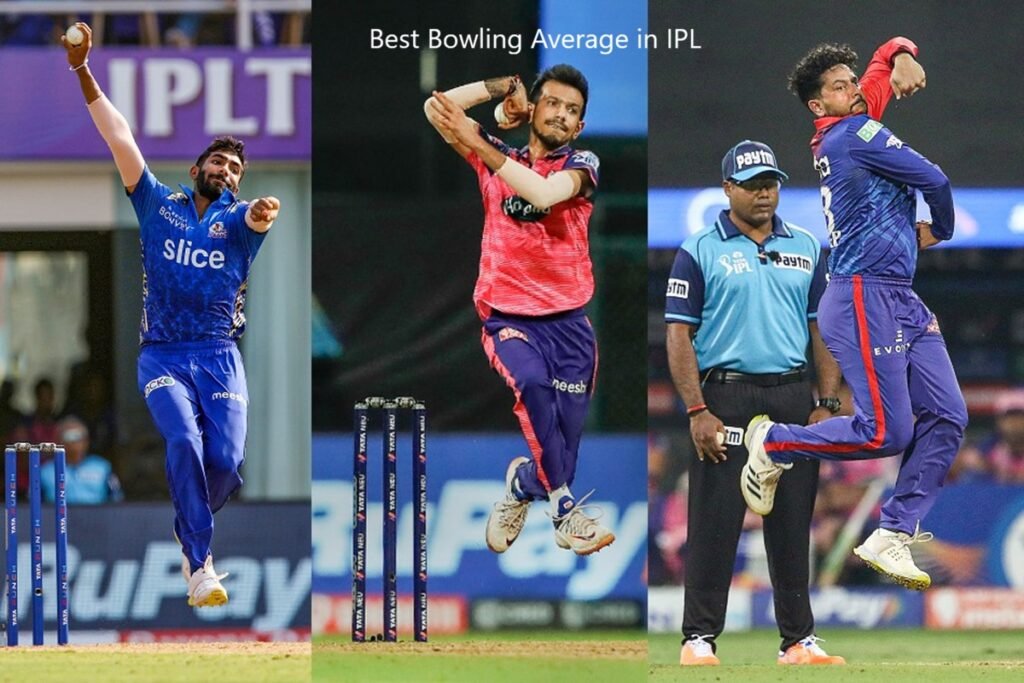
The Indian Premier League (IPL) is one of the most competitive T20 cricket tournaments globally. Since its start in 2008, the league has featured a number of the best bowlers from superb international places. While batsmen frequently get the spotlight for scoring centuries and hitting 6, bowlers play a further vital feature in locating out the final results of suits. The excellent bowling in the IPL is an exciting feature that highlights bowlers who have continuously performed well under pressure. Fast bowlers, swing specialists, wrist spinners and mystery spinners have all made their mark in IPL data.
What Is the Best Bowling Average in IPL?
The high-quality bowling average is based on the qualification used for the file. Some scores consist of each bowler, while others require a minimum number of wickets to make the evaluation meaningful.
According to available professional data statistics, Doug Bollinger has an IPL bowling average of 18.73, with 37 wickets in 27 fits. Among bowlers with a minimum of 50 career wickets, Lasith Malinga stands out with a median of 19.80 from 170 wickets.
Top Bowlers With the Best Bowling Average in IPL History
The following desk highlights brilliant bowlers with extraordinary professional bowling averages. The foremost assessment uses no more than 50 wickets to highlight top IPL performers.
| Rank | Bowler | IPL Wickets | Bowling Average |
|---|---|---|---|
| 1 | Lasith Malinga | 170 | 19.80 |
| 2 | Imran Tahir | 82 | 20.77 |
| 3 | Kagiso Rabada | 148 | 22.69 |
| 4 | Munaf Patel | 74 | 22.95 |
| 5 | Mitchell Starc | 76 | 23.03 |
| 6 | Yuzvendra Chahal | 233 | 23.25 |
| 7 | Andre Russell | 123 | 23.28 |
| 8 | Josh Hazlewood | 72 | 23.47 |
| 9 | Ashish Nehra | 106 | 23.54 |
| 10 | Jasprit Bumrah | 187 | 23.75 |
Career figures are primarily based on the stated historic leaderboard and may vary slightly among statistical databases or after updates. Doug Bollinger’s 18.73 average is included one after the opposite due to the truth he has fewer than 50 wickets.
1. Doug Bollinger – Outstanding Bowling Average
Doug Bollinger has turned out to be one of the most effective left-arm rapid bowlers to play in the IPL. Representing Chennai Super Kings, he has become known for his accuracy, disciplined line and length, and potential to trouble batsmen with tempo and motion.
His IPL bowling average of 18.73 is a fantastic achievement. He took 37 wickets in 27 suits at the same time as conceding 693 runs. His performances established that bowlers no longer constantly want immoderate pace to reach T20 cricket.
2. Lasith Malinga – A Legendary IPL Bowler
Lasith Malinga is one of the maximum a achievement rapid bowlers in IPL facts. The former Sri Lankan international represented Mumbai Indians for optimum of his IPL profession and performed a main function in the institution’s success.
He took one hundred and seventy wickets in 122 matches, keeping a superb bowling average of 19.80. His uncommon bowling motion, accurate yorkers, and slower deliveries made him extraordinarily difficult to face.
Malinga turned out to be particularly dangerous in the course of the very last overs of an innings. His capability to supply accurate yorkers under strain helped Mumbai Indians defend hard totals.
3. Imran Tahir – A Successful Leg-Spin Specialist
Imran Tahir is another outstanding name amongst bowlers with extraordinary IPL bowling averages. The South African leg-spinner became especially effective in the course of his time with Chennai Super Kings.
Tahir claimed 80 wickets in fifty-nine fits at a mean of 20.77. His attacking method and ability to generate turn helped him dismiss skilled worldwide batsmen. Celebrations after taking wickets also became a memorable feature of IPL fits.
4. Kagiso Rabada – Consistent Fast Bowling
Kagiso Rabada has installed himself as one of the principal fast bowlers in cutting-edge franchise cricket. His tempo, leap, ap and ability to bowl correct yorkers make him a volatile opponent.
Rabada has taken 148 IPL wickets at an average of 22.69 in the historic leaderboard used right here.
He has represented unique franchises and delivered important performances with the contemporary-day ball and within the route of the loss of life overs.
5. Yuzvendra Chahal – A Leading Wicket-Taking Spinner
Yuzvendra Chahal is one of the most successful Indian spin bowlers in IPL records. His potential to deceive batsmen through flight, spin,ip and variations in tempo has helped him take wickets.
He has taken 233 IPL wickets, making him one of the principal wicket-takers within the sport.
His bowling not unusual is around 23.25 inside the historic leaderboard used for this assessment. Chahal’s performances display that a spinner can stay a success even on batting-high-quality pitches.
He is especially powerful in the path of the middle overs, even as groups attempt to assemble partnerships and hold scoring momentum.
6. Andre Russell – An Important All-Rounder
Andre Russell is notably stated for his explosive batting, but his bowling has moreover contributed considerably to Kolkata Knight Riders.
He has taken 123 IPL wickets at a mean of 23.28 in the historical leaderboard. His potential to bowl speedy deliveries, use short balls, and vary his tempo makes him a beneficial alternative for captains.
Russell is especially precious because he can make a contribution with both bat and ball. His performances show how an all-rounder can affect a T20 game with a couple of techniques.
7. Jasprit Bumrah – One of India’s Finest Fast Bowlers
Jasprit Bumrah is a number of the maximum reliable fast bowlers in modern-day- IPL cricket. Playing for Mumbai Indians, he has earned a recognition for his splendid accuracy and capability to carry out under stress.
Bumrah’s most crucial strengths are his yorkers, slower balls, uncommon bowling movement, and manipulate over line and period.
He has taken 187 wickets at a bowling not unusual of 23.75 inside the historical assessment. His performances within the powerplay and dying overs have made him a vital part of Mumbai Indians’ bowling assault.
8. Josh Hazlewood – Accuracy and Discipline
Josh Hazlewood is an Australian fast bowler known for his disciplined bowling style. He usually focuses on keeping a ordinary line and duration in location of relying excellent on velocity.
His ability to extract bounce and movement makes him a hard bowler in tremendous conditions.
In the historical IPL data carried out in this newsletter, Hazlewood has taken seventy wickets at a mean of 23.47. He has confirmed the importance of consistency and staying power in T20 cricket.
9. Ashish Nehra – An Experienced Indian Fast Bowler
Ashish Nehra came to be an important fast bowler in Indian cricket and, loved a achievement durations within the IPL.
He took 106 wickets at a mean of 23.54 in the history books.
Nehra grow to be recognized for his enjoy, swing bowling and ability to apprehend healthful situations. His performances helped numerous teams decorate their bowling departments.
10. Munaf Patel – A Dependable Pace Bowler
Munaf Patel became one of the Indian fast bowlers who made a valuable contribution to IPL cricket.
He took 74 wickets at a median of 22.95 in the historical evaluation. His bowling was primarily based completely totally on accuracy, motion and disciplined execution.
He turned out to be particularly beneficial at the same time as teams desired a bowler who could keep the pressure on and restrict the competition’s scoring opportunities.
How Is Bowling Average Calculated in IPL?
Bowling average is one of the most vital records used to gauge a bowler’s effectiveness.
The calculation is simple. You divide the total runs conceded by the number of wickets taken.
Bowling Average Formula:
[ textBowling Average = fractextTotal Runs ConcededtextTotal Wickets ]
For instance, consider a bowler who concedes six hundred runs and takes 30 wickets at some stage in an IPL season.
[ 600 div 30 = 20 ]
This approach gives the bowler a bowling economy of 20.00. A lower economy rate commonly suggests higher wicket-taking overall performance. However, it’s vital to consider the kind of fits finished and the bowler’s regular contribution.
Difference Between Bowling Average, Economy Rate and Strike Rate
These three facts are usually used to evaluate IPL bowlers, however every measures some problem one-of-a-type.
| Statistic | Meaning | What It Measures |
|---|---|---|
| Bowling Average | Runs conceded per wicket | Wicket-taking efficiency |
| Economy Rate | Runs conceded per over | Run control |
| Bowling Strike Rate | Balls bowled per wicket | Frequency of taking wickets |
For example, a bowler may also move a low monetary system fee however a reasonably immoderate bowling commonplace within the occasion that they do now not take many wickets. Similarly, a bowler may moreover have a excessive economic gadget charge however a low bowling not unusual in the event that they frequently take important wickets.
Why Is Bowling Average Important in IPL?
Bowling average helps businesses understand how efficiently a participant takes wickets. In a competition similar to the IPL, in which batsmen frequently assault from the beginning, taking wickets regularly is extremely essential.
There are numerous reasons why this statistic is important.
1. Measures Wicket-Taking Ability
A bowler who frequently takes wickets can prevent the competition from building sturdy partnerships. A low economy suggests that fewer runs are being conceded for every wicket.
2. Helps Compare Different Bowlers
Bowling commonplace makes it less complex to have a look at gamers from distinct groups and seasons. It offers a useful indication of their overall performance.
3. Helps Team Selection
IPL franchises take a look at bowling statistics before selecting players for their squads. Bowling common, monetary device rate and strike rate help control come to be aware of suitable game enthusiasts.
4. Shows Consistency
Maintaining an extremely good bowling average over numerous seasons calls for potential, challenge, and flexibility. It is especially tough on batting-quality pitches.
5. Highlights Match-Winning Performances
Bowlers who take wickets at important moments can change the course of a match. Their contribution isn’t always normally contemplated inside the very last score by myself.
Factors That Affect Bowling Average in IPL
Several elements affect a bowler’s performance at some unspecified time in the future of the occasion.
| Factor | Effect on Bowling Performance |
|---|---|
| Pitch Conditions | Some pitches support fast bowling, while others favour spin. |
| Weather Conditions | Humidity and moisture can influence swing and movement. |
| Opposition Batsmen | Strong batting line-ups can make wicket-taking difficult. |
| Ground Size | Smaller boundaries can increase the number of runs conceded. |
| Bowling Position | Powerplay and death-over responsibilities affect statistics. |
| Team Strategy | Captaincy decisions influence a bowler’s opportunities. |
| Experience | Experienced bowlers often understand match situations better. |
Best Bowling Figures in IPL History
Bowling averages and exceptional bowling figures are unique data. The common presentations show regular standard overall performance, whilst first-rate bowling figures highlight a person’sinnings.
Some memorable IPL bowling performances include:
| Bowler | Team | Best Bowling Figures |
|---|---|---|
| Alzarri Joseph | Mumbai Indians | 6/12 |
| Sohail Tanvir | Rajasthan Royals | 6/14 |
| Adam Zampa | Rajasthan Royals | 6/19 |
| Anil Kumble | Royal Challengers Bengaluru | 5/5 |
| Ishant Sharma | Sunrisers Hyderabad | 5/12 |
How Can Bowlers Maintain a Good Bowling Average?
Maintaining an first rate bowling not unusual in IPL cricket isn’t easy. Bowlers face aggressive batsmen, changing pitch conditions and pressure conditions inside the course of the opposition.
Some vital techniques can assist in delivering consistent, high-quality performances.
- Maintain line and length: Accurate bowling reduces scoring possibilities and creates opportunities for errors.
- Develop variations: Slower balls, cutters, and yorkers assist bowlers against batsmen.
- Understand the batsman: Studying a batter’s strengths and weaknesses can enhance bowling picks.
- Use problem placements successfully: A suitable fielding placement can create opportunities for wickets.
- Control pressure: Staying calm in the face of tough overs is crucial in T20 cricket.
- Improve health: Physical fitness enables bowlers to maintain pace, accuracy, and consistency during an occasion.
Modern IPL bowlers additionally use video evaluation and overall performance information to understand their strengths.
Frequently Asked Questions (FAQs)
1. Who has the quality bowling not unusual in IPL records?
Doug Bollinger has a recorded IPL bowling average of 18.73, with 37 wickets in 27 matches. Rankings can vary depending on whether you count the minimum number of wickets or the wickets required.
2. What is Lasith Malinga’s bowling average in the IPL?
Lasith Malinga has a career bowling average of 19.80 within the historical records applied in this newsletter. He took a hundred seventy wickets in 122 fits.
3. Who is the maximum wicket-taking bowler in IPL records?
Yuzvendra Chahal is ranked the top wicket-taker, with 233 wickets in the available up-to-date IPL information.
4. What is considered a superb bowling performance common in IPL?
A bowling average under 25 is typically considered robust in IPL cricket. A common close to 20-over spell is especially awesome.
5. How do you calculate bowling average in cricket?
Bowling average is calculated by dividing the total runs conceded by the number of wickets taken. For example, 500 runs conceded for 25 wickets gives an average of 20.
6. Is bowling commonplace extra crucial than economic gadget price?
Both pieces of information are important. Bowling average measures the runs conceded in step with wickets, while the economy rate measures the runs conceded in keeping with overs. A complete evaluation wants to not forget everything.
7. Who has the first-rate bowling common among bowlers with 50 or more IPL wickets?
Lasith Malinga is on the pinnacle of the historical leaderboard used proper right here, with an average of 19.80 and 100 and 70 wickets.
8. Why do a little IPL bowling common lists display specific game enthusiasts at primary?
Different net websites practice specific qualification guidelines. Some show fewer runs or wickets, while others require a lot less than 50 or 100 wickets. Statistics can also vary due to database updates.
9. What is the difference between bowling common and bowling strike fee?
Bowling not-out measures runs conceded in line with wickets, while bowling strike rate measures the rate of balls bowled to wickets. Both help assess a bowler’soverall performance.
10. Why are loss of life-over bowlers essential in IPL?
Death-over bowlers are liable for controlling runs at a few degrees within the very last overs. They regularly face aggressive batsmen and ought to execute yorkers, slower balls, and unique variations successfully.
Conclusion
The outstanding bowling common in IPL is crucial statistical data that highlights the effectiveness of bowlers in the pursuit of the best. Doug Bollinger’s extraordinary not unusual of 18.73 stands proud among bowlers with fewer than 50 profession wickets, at the identical time as Lasith Malinga’s 19.80 average and a 170 wickets make his record mainly amazing amongst set up wicket-takers.
Imran Tahir, Kagiso Rabada, Yuzvendra Chahal, Jasprit Bumrah and severalone-of-a-kind talented bowlers have additionally produced wonderful performances.
However, bowling is only one part of a player’s overall contribution. Economy charge, bowling strike price, wickets taken and in shape-prevailing spells moreover assist deliver an motive for a bowler’s price.